

Dr. Jitender Giri
Staff Scientist VI
Ph. D, University of Delhi, South Campus
- 91-11-26735227 Fax: 91-11-26742658
- jitender@nipgr.ac.in, jitender.giri@gmail.com
Profile
Research Interests
Understanding molecular regulation of low phosphate adaptations
My lab’s focus is on finding novel genes and understanding their functions in cellular signaling in response to limiting Phosphorus (P) conditions. Plants activate a diverse set of responses to face P scarcity and consequently alter physiological, biochemical and developmental processes. We are targeting P solubilizing enzymes, membrane remodeling genes and root development to improve resource acquisition and utilization in rice and chickpea. We employ modern tools of genomics like transcriptomics, metabolomics, phenomics, transgenesis and gene editing to pinpoint candidate genes for improving plant performance in low P input system.
Current Research
Beyond Photosynthesis: The Chloroplast’s Adaptations help plants thrive in phosphate scarcity
Plants have the incredible ability to produce their own food, thanks to chloroplasts. These organelles also help plants thrive in environments with low phosphate levels. One of the most impressive ways chloroplasts do this is by using galactolipids, which are lipids that don’t require phosphate.
Phosphate is a crucial nutrient for many cellular processes, including photosynthesis. However, many soils and environments have sub-optimal levels of phosphate, leading to poor plant growth and crop yield. Chloroplastic membranes thylakoid/envelope are the most abundant cellular membranes in plants. Galactolipids make up most of the glycerolipids in chloroplast membranes, accounting for over 80% of the total lipids. When phosphate levels are low, plants further break down phosphate lipids, phospholipids and increase the production of galactolipids. This process, called membrane lipid remodeling, enables plant cells to maintain their structural integrity and function even when phosphate is limited (Verma et al., 2021 Plant Physiology & Biochemistry).
Understanding and manipulating this intriguing display of cellular P reutilization is our strategy for generating environment-resilient crops. We are targeting several enzymes of this pathway like GDPDs (Mehra et al., Plant Cell & Environment), MGDGs (Verma et al., 2021; JXB) and DGDGs to understand their roles in rice using biochemistry, molecular biology, transgenesis and genome editing approach.
Gene-editing for exploring the role of P-related genes and creating novel gene variants
CRISPR/Cas9 and new emerging gene-editing tools have revolutionized the field of genomics. No other method has given such a control over changing the gene functions in plants. We are utilizing gene editing in rice to knock out genes, create new alleles and alter transcriptional regulation of phosphate transport and signaling genes. We have used sgRNA and multiplexing strategies in manipulating different genes involved in P-related signalling. Some of the successful stories from our lab include the characterization of the rice citrate transporter, OsCT1, for its role in Pi uptake and metal distribution (Panchal et al., 2023; Plant Journal); demonstration of marker-free gene-edited lines carrying only an SNP in MGD3 synthase gene, OsMGD3 a phospholipid remodelling gene in rice (Verma et al., 2022; Journal of Experimental Botany) and revealing a novel role for rice PAP3b gene in phosphate homeostasis (Bhadouria et al., 2023; Plant Cell & Physiology). We have also been able to raise gene-edited lines using DNA-free Ribo-Nucleo Protein (RNP) system in rice. The lab is interested in testing new tools for making precise gene-editing in rice genes for improving plant response to challenging environments.
Looking underground: Understanding Roots for future plants
Roots, often neglected by plant researchers, have the potential for crop production in future challenging environments. Plants with efficient roots adapted to the local environment can sustain crop yield in soils with minimum water and fertilizer inputs. Our focus is on identifying the root traits that enable plants to tolerate soil mineral deficiencies. Research has shown that root hairs, which are responsible for half of the total phosphate uptake, are highly responsive to low phosphorus deficiencies (Giri et al., 2018 Nature Communications; Bhosale & Giri et al., 2018, Nature Communications). We have studied this response in rice and chickpeas using cutting-edge techniques such as high-throughput root phenotyping, gene editing, GWAS, and transcriptomics (Kohli et al., 2020 FIGE; Kohli et al., 2021 Plant Cell & Environment). We are also investigating how roots respond to other abiotic stresses using advanced molecular and genetic techniques. Our research has the potential to improve our understanding of root responses to abiotic stresses, which is crucial for sustainable agriculture

Purple Acid Phosphatases (PAPs): enzymes with dynamic roles
This colorful set of enzymes named so due to their purple color in aqueous solution, play diverse roles in plants besides their key role in organic-P solubilization inside and outside the cell. PAPs fall under the larger category of Acid Phosphatase (APase) and may regulate cellular signaling or influence processes like P-remobilization, senescence, seed phosphate loading, ROS detoxification, carbon metabolism by the virtue of their signaling and enzymatic activities (Mehra et al., 2017; Bhadouria et al., 2017). Besides their transcriptional regulation by environmental stresses, PAPs are subjected to extensive post-translational modifications to execute their actions. Another class of APase known as Halo Acid Dehalogenases (HADs) is hydrolases with strong catalytic activity (Pandey et al., 2017). We are interested in discovering new APases, finding their biochemical attributes and engineering them with enhanced biochemical activity for manipulating their biological actions towards crop improvement for low input production.
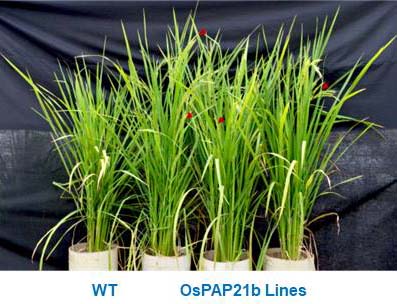
Transgenics with PAP21b are more efficient than WT in P limited soils
Ongoing projects:
1. Beyond Transgenic Plants: Use of Precise Genome Editing for Improving Plant Growth Under Low Phosphorous Input. Funded by: DBT-Indo-Swiss joint project
2.Unlinking phosphate deficiency responses from their adverse effects on growth in rice. Funder under: Swarna Jayanti Fellowship
3.Targeting Pup1 independent mechanisms for improving low soil phosphorus tolerance and use-efficiency in rice. Funded by: DBT NIPGR-IIRR, joint research project
Career
Visiting Scientist, University of Nottingham, UK (2013-2014)
Visiting Scientist, Penn State University, USA (2012)
Scientist, NIPGR (2011 onwards)
Awards and Scholarships
Year
Awards /Scholarships
Fellow of National Academy of Sciences India (FNASc)
2019
SwarnaJayanti Fellowship Award from DST, India
2018
NASI-SCOPUS Young Scientist Award
2016
Innovative Young Biotechnologist Award (IYBA), DBT, India
2015
Indian National Science Academy (INSA) medal for Young Scientist.
2013
Young Scientist Platinum Jubilee Award from the NASI, India.
2019
Prof. Hiralal Chakraborty Award by Indian Science Congress
2011-12
DBT-CREST Fellowship Award for 2011-2012 from the Department of Biotechnology, Government of India, New Delhi.
2019
Prof. Y.S. Murty Medal for Young Scientist by Indian Botanical Society
2004-09
Junior and Senior Research Fellowships, CSIR
University Gold Medal for first position in master's examination
Current Members
Mr. Ajit Pal Singh
Ph. D. Student
Role of jasmonate signaling components in nutrient deficiency responses
- ajit@nipgr.ac.in
Mr. Lokesh Verma
Ph. D. Student
Engineering galactolipid biosynthesis pathway for improving Phosphorus use efficiency
- lokeshverma203@gmail.com
Ms. Jyoti Bhadouria
Ph. D. Student
Elucidating diverse roles of Purple Acid Phosphatases in Chickpea
- jyoti@nipgr.ac.in
Ms. Poonam Panchal
Ph. D. Student
Studying organic acid metabolism in multiple abiotic stresses in rice
- poonampanchal68@gmail.com
Ms Rita Verma
Rita has joined recently as JRF in DBT-IYBA project
LAB Alumni
Dr. Shweta Jha
Joined as first postdoc in my lab. She is now Assistant professor in JNV University Jodhpur, Rajasthan.
- jha.shweta80@gmail.com
Dr. Poonam Mehra
Poonam was first Ph.D. student in my lab (2011-2017). She is currently working as DST-INSPIRE Faculty in Department of Plant Molecular Biology, University of Delhi, South Campus, New Delhi.
- poonammehra261@gmail.com
Dr. Bipin Kumar Pandey
Bipin was first Ph.D. batch student in my lab (2011-2017). He is now working as future food beacon fellow in University of Nottingham, UK
- bipinkbiotech@gmail.com
Dr. Gunjan Sirohi
Gunjan was postdoc in lab and she is now working as SERB-Young Scientist in IP University, New Delhi.
- gunjan.roy08@gmail.com
Dr. Tirthankar Bandyopadhyay
did his postdoctoral training in my lab and he is continuing his research as Research Associate in Cambridge-India Network for Translational Research in Nitrogen (CINTRIN) in NIPGR, New Delhi.
- cybertirtha@gmail.com
Dr. Neelam Sodha
Neelam worked as a postdoc in my lab and she is now working with medical device company in USA.
- sodha.neelam@gmail.com
Meenakshi Sharma
Meenakshi was a JRF for long time in lab and she is now a Ph.D. candidate in IARI, New Delhi.
Selected Publications
Kohli PS, Donde R, Sirohi U, Singh B, Anantha MS, Bhadana VP, Sundaram RM, Mangrauthia SK, Giri J*, Physiological and genetic basis of superior phosphate uptake and utilization efficiency in the rice landrace Wazuhophek (2025)., Journal of Experimental Botany *Corresponding author eraf331, https://doi.org/10.1093/jxb/eraf331 (Impact Factor: 5.7)
Maurya, K., Mani, B., Singh, B., Sirohi, U., Jaskolowski, A., Sharma, S., Tatiparthi, H.V., Mangrauthia, S.K., Pandey, R., Poirier, Y. and Giri, J*. (2025), Editing cis-elements of OsPHO1;2 improved phosphate transport and yield in rice. Plant Biotechnol. J. https://doi.org/10.1111/pbi.70165 *Corresponding author (Impact Factor: 10.5)
Verma L, Pandey M, Bhatia C, Mehra M, Singh B, Giri J* (2025). Phosphate deficiency inducible OsGDPD5 affects root growth by regulating sugar-auxin crosstalk. the Plant Journal 121 (3), e17249. *Corresponding author (Impact Factor: 7)
Srivastava A, Gupta A, Bishi SK, Akhila P, Latha PC, Subrahmanyam D, ….Giri J, … & Mangrauthia SK (2025). Tolerance of Oryza sativa to low phosphate is associated with adaptive changes in root architecture and metabolic exudates. Plant Science 112415. (Impact Factor: 5)
Pandey M, Verma L, Kohli PS, Singh B, Abhijith KB & Giri J* (2024) A lipid synthase maintains metabolic flux for jasmonate synthesis to regulate root growth and phosphate homeostasis. Plant Physiology 197 (2), https://doi.org/10.1093/plphys/kiae453 *Corresponding author (Impact Factor: 8)
Mani B, Maurya K, Kohli PS, Giri J* (2024) Chickpea (Cicer arietinum) PHO1 family members function redundantly in Pi transport and root nodulation, Plant Physiology and Biochemistry, 211, 108712. *Corresponding author (Impact Factor: 6.1)
Donde R, Kohli PS, Pandey M, Sirohi U, Singh B, Giri J (2024). Dissecting chickpea genomic loci associated with the root penetration responsive traits in compacted soil. Planta 259, 17. *Corresponding author (Impact Factor: 6.1)
Vashisth, V, Sharma, G, Giri J, Sharma AK, Tyagi AK (2024). Rice A20/AN1 protein, OsSAP10, confers water-deficit stress tolerance via proteasome pathway and positive regulation of ABA signaling in Arabidopsis. Plant Cell Rep 43, 215.
Panchal P, Bhatia C, Chen Y, Meenakshi, Bhadouria J, Verma L, Maurya K, Miller AJ & Giri J*. A citrate efflux transporter important for manganese distribution and phosphorus uptake in rice. The Plant Journal, 2023 (https://doi.org/10.1111/tpj.16463) *corresponding author (Impact Factor: 7.2)
Agrawal R, Singh A, Giri J, Magyar Z, Thakur JK (2023). MEDIATOR SUBUNIT17 is required for transcriptional optimization of root system architecture in Arabidopsis, Plant Physiology, 2023; kiad129, https://doi.org/10.1093/plphys/kiad129 (Impact Factor: 8)
Singh, S., Chaudhary, C., Bharsakale, R.D., Gazal, S., Verma, L., Tarannum, Z., Behere, G.T., Giri, J., Germain, H., Ghosh, D.K., Sharma, A.K. and Chauhan, H. (2023), PRpnp, a novel dual activity PNP family protein improves plant vigour and confers multiple stress tolerance in Citrus aurantifolia. Plant Biotechnol. J, 21: 726-741 (Impact Factor: 13)
Bhadouria J, Mehra P, Verma L, Pazhamala LT, Rumi R, Panchal P, Sinha AK, Giri J (2023), Root-Expressed Rice PAP3b Enhances Secreted APase Activity and Helps Utilize Organic Phosphate, Plant and Cell Physiology, 64 (5), 501-518 *corresponding author (Impact Factor: 5)
Pazhamala LT, and Giri J (2023) Plant phosphate status influences root biotic interactions. Journal of Experimental Botany (in press) *corresponding author (Impact Factor: 7)
Verma L, Bhadouria J, Bhunia RK, Singh S, Panchal P, Bhatia C, Eastmond PJ, & Giri J (2022). Monogalactosyl Diacylglycerol Synthase 3 (OsMGD3) affects phosphate utilization and acquisition in rice. Journal of Experimental Botany 73 (14), 5033-5051) *corresponding author (Impact Factor: 7)
Panchal P, Preece C, Peñuelas J and Giri J* (2022). Soil carbon sequestration by root exudates. Trends in Plant Science (In Press) ISSN:1360-1385 *corresponding author (Impact Factor: 20)
Kohli PS, Maurya K, Thakur JK, Bhosale R, Giri J* (2022). Significance of root hairs in developing stress-resilient plants for sustainable crop production. Plant Cell & Environment 45 (3), 677-694), ISSN:1365-3040. *corresponding author (Impact Factor: 7.2)
Mehra P, Pandey BK, Verma L, Prusty A, Singh AP, Sharma S, Malik N, Bennett MJ, Parida SK, Giri J, and Tyagi AK (2022). OsJAZ11 regulates spikelet and seed development in rice. Plant Direct 6 (5), e401 (Impact Factor: 3.9)
Fonta, J.E., Giri, J., Vejchasarn, P. et al. Spatiotemporal responses of rice root architecture and anatomy to drought. Plant Soil (2022). https://doi.org/10.1007/s11104-022-05527-w (Impact Factor: 4.1)
Verma L, Kohli PS, Maurya K, Abhijith KB, Thakur JK, Giri J* (2021). Specific galactolipids species correlate with rice genotypic variability for phosphate utilization efficiency. Plant Physiology and Biochemistry, 168, 105-115, ISSN: 0981-9428. *corresponding author (Impact Factor: 4.2)
Pandey BK, Verma L, Prusty A, Singh AP, Bennett MJ, Tyagi AK, Giri J*, Mehra P* (2021). OsJAZ11 regulates phosphate starvation responses in rice. Planta, 254(1), 1-16, ISSN: 0032-0935. *corresponding author (Impact Factor: 4.1)
Panchal P, Miller AJ, Giri J* (2021). Organic acids: Versatile stress response roles in plants. Journal of Experimental Botany, 72 (11), 4038-4052, ISSN 0022-0957. *corresponding author (Impact Factor: 6.9)
Singh A, Mani B, Giri J* (2021). OsJAZ9 is involved in water-deficit stress tolerance by regulating leaf width and stomatal density in rice. Plant Physiology & Biochemistry, 162, 161-170, ISSN: 0981-9428. *corresponding author (Impact Factor: 4.2)
Bhadouria J, and Giri J* (2021). Purple acid phosphatases: roles in phosphate utilization and new emerging functions. Plant Cell Reports, 1-19, eISSN: 1432-203X, ISSN: 0721-7714. *corresponding author (Impact Factor: 4)
Panchal P, Miller AJ, Giri J* (2021). Organic acids: Versatile stress response roles in plants. Journal of Experimental Botany, 72 (11), 4038-4052, ISSN 0022-0957. *corresponding author (Impact Factor: 6.9)
Verma L, Rumi, Sinha AK Giri J* (2021). Phosphate deficiency response and membrane lipid remodeling in plants. Plant Physiology Reports, ISSN: 2662-253X. https://doi.org/10.1007/s40502-021-00624-x (Impact Factor: NA) 26 (4), 614-625 *corresponding author
Kale RR, Durga Rani CV, Anila M, Mahadeva Swamy HK, Bhadana VP, Senguttuve P, Subrahmanyam D, Ayyappa DM, Swapnil K, Anantha MS, Punniakotti E, Laxmi Prasanna B, Rekha G, Sinha P, Kousik MBVN, Dilip T, Hajira SK, Brajendra P, Mangrauthia SK, Gireesh C, Tuti M, Mahendrakumar R, Giri J, Singh P, Sundaram RM (2021). Novel major QTLs associated with low soil phosphorus tolerance identified from the Indian rice landrace, Wazuhophek. PlOS One 16 (7), e0254526, eISSN: 1932-6203. (Impact Factor: 3.2)
Soni P, Shivhare R, Kaur A, Bansal S, Sonah H, Deshmukh R, Giri J, Lata C, Ram H (2021). Reference gene identification for gene expression analysis in rice under different metal stress. Journal of Biotechnology 332, 83-93, ISSN: 0168-1656. (Impact Factor: 3.3)
Giri J, Parida SK, Raghuvanshi S and Tyagi AK (2021). Emerging molecular strategies for improving rice drought tolerance. Current Genomics, 21, 1, ISSN: 1389-2029. https://doi.org/10.2174/1389202921999201231205024 (Impact Factor: 2.3)
Singh AP, Pandey BK, Mehra P, Heitz T, Giri J* (2020). OsJAZ9 overexpression modulates jasmonic acid biosynthesis and potassium deficiency responses in rice. Plant Molecular Biology, 104 (4), 397-410, eISSN: 0167-4412. *corresponding author (Impact Factor: 4)
Kohli PS, Verma PK, Verma R, Parida SK, Thakur JK, Giri J* (2020). Genome-wide association study for phosphate deficiency responsive root hair elongation in chickpea. Functional & Integrative Genomics, 20, 775-786, eISSN: 1438-7948. *corresponding author (Impact Factor: 3.4)
Mehra P, Pandey BK, Verma L, Giri J* (2019). A novel glycerophosphodiester phosphodiesterase improves phosphate deficiency tolerance in rice Plant, Cell & Environment, 42, 1167-1179, eISSN: 1365-3040 *corresponding author (Impact Factor: 7.2)
Kong X, Huang G, Xiong Y, Zhao C, Wang J, Song X, Giri J, Zuo, K (2019). IBR5 regulates leaf serrations development via modulation of the expression of PIN1. International Journal of Molecular Sciences, 20 (18), 4429, eISSN: 1422-0067 (Impact Factor: 4.1)
Giri J, Bhosale R, Huang G, Pandey BK, Parker H, Zappala S, Yang J, … Bennett MJ (2018). Rice auxin influx carrier OsAUX1 facilitates root hair elongation in response to low external phosphate. Nature Communications, 9 (1), 1408, eISSN 2041-1723. (Impact Factor: 14.9)
Bhosale R*, Giri J*, Pandey BK*, Giehl RFH, Hartmann A, Traini R …..Bennett MJ (2018). A mechanistic framework for auxin dependent Arabidopsis root hair elongation to low external phosphate. Nature Communications, 9 (1), 1409, eISSN 2041-1723. *joint first author (Impact Factor: 14.9)
Huang G, Liang W, Sturrock CJ, Pandey B K, Giri J, Mairhofer S, Wang D, Muller L, Tan H,…….. Zhang D. (2018). Rice actin binding protein RMD controls crown root angle in response to external phosphate. Nature Communications, 9 (1) 2346, e ISSN 2041-1723. (Impact Factor: 14.9)
Ajmera I, Shi J, Giri J, Wu P, Stekel DJ, Lu C, Hodgman TC (2018). Regulatory feedback response mechanisms to phosphate starvation in rice. NPJ Systems Biology and Applications, 4 (1), 4, ISSN 2056-7189. (Impact Factor: 4.3)
Singh V, Singh AP, Bhadouria J, Giri J, Singh J, TV Vineeth, Sharma P C (2018). Differential expression of salt-responsive genes to salinity stress in salt-tolerant and salt-sensitive rice (Oryza sativa L.) at seedling stage. Protoplasma, 255 (6), 1667-1681, ISSN: 0033-183X (Impact Factor: 3.3)
Pandey BK, Mehra P, Verma L, Bhadouria J and Giri J* (2017). OsHAD1, a haloacid dehalogenase-like APase enhances phosphate accumulation. Plant Physiology, 174, 2316-2332, ISSN 0032-0889. *corresponding author (Impact Factor: 6.3)
Mehra P, Pandey BK and Giri J* (2017). Improvement of phosphate acquisition and utilization by a secretory purple acid phosphatase (OsPAP21b) in rice. Plant Biotechnology Journal 15 (8), 1054-1067, eISSN: 1467-7652. *corresponding author (Impact Factor: 8.1)
Soda N, Verma L and Giri J* (2017). CRISPR-Cas9 based plant genome editing: Significance, opportunities and recent advances. Plant Physiology and Biochemistry, 131, 2-11, ISSN: 0981-9428. *corresponding author (Impact Factor: 4.2)
Bhadouria J, Singh AP, Mehra P, Verma L, Srivastawa R, Parida SK and Giri J* (2017). Identification of purple acid phosphatases in chickpea and potential roles of CaPAP7 in seed phytate accumulation. Scientific Reports, 7: 11012, ISSN: 20452322. *corresponding author (Impact Factor: 5.1)
Bandyopadhyay T, Mehra P, Hairat S and Giri J* (2017). Morpho-physiological and transcriptome profiling reveal novel zinc deficiency-responsive genes in rice. Functional & Integrative Genomics, 17 (5), 565-581, eISSN: 1438-7948. *corresponding author (Impact Factor: 3.4)
Sharma G, Giri J and Tyagi AK (2017). Sub-functionalization in rice gene families with regulatory roles in abiotic stress responses. Critical Reviews in Plant Sciences, 35, 231-285, eISSN: 0735-2689. (Impact Factor: 5.1)
Kothari KS, Dansana PK, Giri J and Tyagi AK (2016). Rice stress associated protein 1 (OsSAP1) interacts with aminotransferase (OsAMTR1) and pathogenesis-related 1a protein (OsSCP) and regulates abiotic stress responses. Frontiers in Plant Science, 7, 1057, ISSN: 1664-462X. (Impact Factor: 5.7)
Mehra P, Pandey BK, Giri J* (2016). Genome-wide DNA polymorphism in low Phosphate tolerant and sensitive rice genotypes. Scientific Reports, 5, ISSN: 20452322. *corresponding author (Impact Factor: 5.1)
Mehra P and Giri J* (2016). Rice and chickpea GDPDs are preferentially influenced low phosphate and CaGDPD1 encodes an active glycerophosphodiester phosphodiesterase enzyme. Plant Cell Reports, 35 (8), 1699-1717, ISSN: 0721-7714. *corresponding author (Impact Factor: 4.5)
Sirohi G, Pandey BK, Deveshwar P and Giri J* (2016). Emerging trends in epigenetic regulation of nutrient deficiency response in plants. Molecular Biotechnology, 58, 159-171, ISSN: 1073-6085. *corresponding author (Impact Factor: 2.6)
Giri J, Tyagi AK (2016). Genetically engineered crops: India’s path ahead. Nature India, eISSN: 1755-3180. doi:10.1038/nindia.2016.30. (Impact Factor: NA)
Mehra P, Pandey BK, Giri J* (2015). Comparative morphophysiological analyses and molecular profiling reveal Pi-efficient strategies of a traditional rice genotype. Frontiers in Plant Science, 6, 1184, ISSN: 1664-462X. *corresponding author (Impact Factor: 5.7)
Sharma G, Giri J and Tyagi AK (2015). Rice OsiSAP7 negatively regulates ABA stress signalling and imparts sensitivity to water-deficit stress in Arabidopsis. Plant Science, 237, 80-92, ISSN: 2331-0669. (Impact Factor: 4.7)
Singh AP, Pandey BK, Deveshwar P, Narnoliya L, Parida SK and Giri J* (2015). JAZ repressors: Potential involvement in nutrients deficiency response in rice and Chickpea. Frontiers in Plant Science, 6, 975, ISSN: 1664-462X. *corresponding author (Impact Factor: 5.7)
Tyagi H, Jha S, Sharma M, Giri J, Tyagi AK (2014). Rice SAPs are responsive to multiple biotic stresses and overexpression of OsSAP1, an A20/AN1 zinc-finger protein, enhances the basal resistance against pathogen infection in tobacco. Plant Science, 225, 68-76, ISSN: 2331-0669. (Impact Factor: 4.7)
Giri J, Dansana PK, Kothari KS, Sharma G, Vij S and Tyagi AK (2013). SAPs as novel regulators of abiotic stress response in plants. BioEssays, 35, 639-648, eISSN: 1521-1878. (Impact Factor: 4.3)
Giri J (2011). Glycinebetaine and abiotic stress tolerance in plants. Plant Signal & Behavior, 6: 1746- 1751, ISSN: 1559-2316. *corresponding author (Impact Factor: 2.2)
Giri J, Vij S, Dansana P, Tyagi AK (2011). Rice A20/AN1 zinc-finger containing stress-associated proteins (SAP1/11) and a receptor-like cytoplasmic kinase (OsRLCK253) interact via A20 zinc-finger and confer abiotic stress tolerance in transgenic Arabidopsis plants. New Phytologist, 191 (3), 721-732, eISSN: 1469-8137. (Impact Factor: 10.5)
Singh A, Giri J, Kapoor S, Tyagi AK, Pandey GK (2010). Protein phosphatase complement in rice: genome-wide identification and transcriptional analysis under abiotic stress condition and reproductive development. BMC Genomics, 11, 435, 1471-2164. (Impact Factor: 3.9)
Ray S, Dansana PK, Giri J, Deveshwar P, Kapoor S, Khurana JP, Tyagi AK (2010). Modulation of transcription factor and metabolic pathway genes in response to water-deficit stress in rice. Functional & Integrative Genomics, 11, 157-178, eISSN: 1438-7948. (Impact Factor: 3.4)
Kathuria* H, Giri* J, Nataraja* KN, Murata N, Udayakumar M, Tyagi AK (2009). Glycinebetaine-induced water-stress tolerance in codA-expressing transgenic indica rice is associated with up-regulation of several stress responsive genes. Plant Biotechnology Journal 7: 512-526, eISSN: 1467-7652. *joint first author. (Impact Factor: 9.8)
Vij* S, Giri* J, Dansana PK, Kapoor S, Tyagi AK (2008). The receptor-like cytoplasmic kinase (OsRLCK) gene family in rice: organization, phylogenetic relationship, and expression during development and stress. Molecular Plant, 1, 732-750, ISSN: 1674-2052. *joint first author. (Impact Factor: 13.1)
Kathuria H, Giri J, Tyagi H, Tyagi AK (2007). Advances in transgenic rice biotechnology. Critical Reviews Plant Science, 26, 65-103, ISSN: 0735-2689. (Impact Factor: 4.1)
Book Chapter
R Rumi, K Maurya, M Pandey, PS Kohli, P Panchal, AK Sinha, J Giri (2023). Biotechnological Approaches for Improving Phosphate Uptake and Assimilation in Plants.
Pandey BK, Mehra P and Giri J (2013) Phosphorus starvation response in plants and opportunities for crop improvement. In: Tuteja N, Gill SS(eds), Climate Change and Abiotic Stress Tolerance. Wiley-VCH Verlag GmbH & Co, Weinheim, Germany, pp 991-1012.
Giri J, Tyagi S, Tyagi AK (2011) Evolution and Diversity of Rice Genome. In Sharma AK (Ed.), Biodiversity. West Bengal Biodiversity Board
Ray S, Dansana PK, Bhaskar A, Giri J, Kapoor S, Khurana JP, Tyagi AK (2009). Emerging trends in functional genomics for stress tolerance in crop plants. In Heribert Hirt, ed, Plant Stress Biology. WILEY-VCH Verlag GmbH and Co. KGaA, Weinheim, pp 37-63.
Tyagi AK, Khurana JP, Khurana P, Kapoor S, Singh VP, Singh AK, Thakur JK, Gupta V, Anand S, Vij S, Jain M, Ray S, Agarwal P, Arora R, Sharma P, Mukerjee S, Nijhawan A, Giri J, Khurana R (2005) Expression and functional analysis of rice genes involved in reproductive development and stress response. Rice Genetics V, 301-334, IRRI, Philippines.
Our research in news
Dr. Jitender Giri’s interview on popular science programme ” Eureka”
Phosphorous Role in Our Life
DBT News “NIPGR develops Genetically Modified rice that can reduce phosphorus fertilizer usage”
http://www.dbtindia.nic.in/rice_phosphorus-fertilizer-usage/
Vigyan Prasar/India Science Wire ” Scientist develop new rice plant that can help save foreign exchange”
http://vigyanprasar.gov.in/isw/boost_crop_yields_story.html
Rajya Sabha TV (Weekly Science roundup programme: Science Monitor)
https://www.youtube.com/watch?v=q3EkUKPWBTA&t=1159s